Bringing Freshness to Your Designs: A Complete Guide to Pears Watercolor Clipart
In the ever-evolving landscape of digital design, there is a persistent demand for assets that feel authentic, organic, and human-made. While vector graphics offer crisp precision, they often lack the warmth and texture that make a project truly stand out. This is where pears watercolor clipart steps in as a transformative element. Whether you are a small business owner crafting a brand identity, an educator designing classroom materials, or a hobbyist creating personalized gifts, these hand-painted illustrations offer a unique blend of rustic charm and modern versatility.
This article explores the significance of using pear-themed watercolor art in your creative workflow. We will delve into why this specific fruit motif is so popular, how these digital assets are created from physical art, and the myriad ways you can incorporate them into everything from digital planners to professional business cards.
The Timeless Appeal of the Pear Motif
Before diving into the technical aspects, it is important to understand why the pear has become such a staple in artistic design. Unlike the apple, which is often associated with uniformity and school themes, the pear offers a distinct silhouette that feels elegant yet approachable. Its asymmetrical shape allows artists to play with composition in ways that rounder fruits cannot.
In the context of watercolor art, the pear provides an excellent canvas for texture. The gradient of colors found on real pears—from deep greens to golden yellows—translates beautifully when painted by hand. This natural variation creates depth that digital flat colors struggle to replicate. When used in design, a pear symbolizes abundance, wisdom, and harmony. It adds a touch of nature to any layout without overwhelming the viewer, making it perfect for brands focused on health, wellness, organic foods, or artisanal crafts.
From Canvas to Screen: How These Assets Are Made
One of the most common misconceptions about "digital clipart" is that it is generated entirely by software algorithms. However, high-quality pears watercolor clipart often begins its life in the physical world. The process described in premium collections involves a traditional artist painting on actual watercolor paper.
The Creation Process:
- Hand Painting: An artist uses real pigments and water on textured paper. This captures the unpredictable flow of water, the granulation of the pigment, and the soft edges that define the watercolor style.
- Digital Scanning: Once the artwork dries, it is scanned at a high resolution to preserve every brushstroke and imperfection.
- Editing and Isolation: Digital editors then clean up the background, enhance the colors if necessary, and separate individual elements. This ensures that the final product retains the soul of the original painting while being flexible enough for modern use.
This hybrid approach bridges the gap between traditional craftsmanship and digital convenience. You get the aesthetic of a gallery piece with the utility of a downloadable file.
What's Inside the Collection?
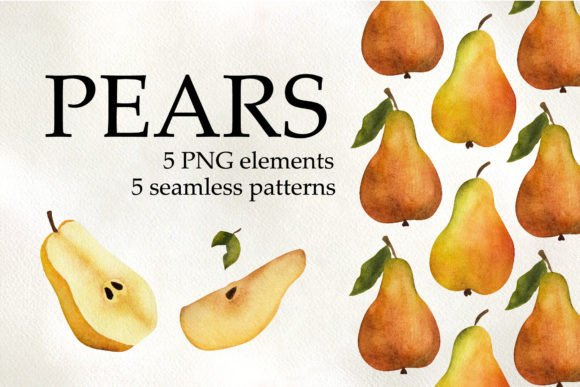
When purchasing or utilizing a comprehensive set of pears watercolor clipart, you are typically looking at a versatile package designed to maximize your creative potential. A standard, high-quality ZIP file usually contains two main categories of assets:
- 5 Seamless Pattern JPEG Files: These are repeating backgrounds featuring clusters of pears, leaves, and flowers. They are ideal for wrapping paper, website backgrounds, or creating a cohesive theme across a series of documents.
- 5 PNG Elements on Transparent Backgrounds: These are isolated images of single pears or small bunches. Because they have no background, you can layer them over any color, texture, or photo without seeing a white box around the fruit.
The inclusion of transparent PNGs is particularly crucial for modern design workflows. It allows designers to place a pear illustration directly onto a dark-colored flyer or a textured photograph without needing complex masking tools.
Practical Applications for Business and Creativity
The beauty of these assets lies in their adaptability. They are not limited to one industry or purpose. Here is how professionals and enthusiasts are currently using pears watercolor clipart to elevate their projects.
Small Business Branding
For entrepreneurs launching a new venture, first impressions matter. Using pear illustrations on business cards can instantly communicate a brand personality that is friendly, organic, and boutique. Imagine a juice bar, a bakery specializing in fruit tarts, or a floral shop. A subtle watercolor pear pattern on the back of a card or a delicate pear icon next to the logo can set the tone before a customer even reads the contact information.
Invitations and Event Planning
Weddings, baby showers, and garden parties often rely on botanical themes. Watercolor pears fit perfectly into fall harvest weddings or spring brunches. They add a whimsical touch to invitations that feels more personal than stock photography. Designers often pair these pears with eucalyptus leaves or soft pastels to create a romantic, airy aesthetic.
Digital Planners and Productivity Tools
In the realm of digital organization, aesthetics play a huge role in motivation. Users of apps like GoodNotes or Notion love customizing their interfaces. Adding pears watercolor clipart as stickers, cover pages, or decorative dividers can turn a mundane planner into a joy to use. The transparent backgrounds allow these elements to float naturally over calendar grids and to-do lists.
Homemade Cards and Crafts
For those who enjoy scrapbooking or card-making, having access to high-resolution scans means you can print exactly what you need. Whether you are creating a birthday card for a friend who loves gardening or a thank-you note for a teacher, these images provide a professional finish that looks far better than generic clip art found in free libraries.
Why Choose Hand-Painted Over Vector Graphics?
You might wonder why you should choose hand-painted watercolor files when vector graphics (like SVG or EPS) are available. The answer lies in the texture and emotion. Vectors are mathematical lines; they are sharp, clean, and scalable. However, they can sometimes feel sterile or corporate.
Watercolor introduces chaos and humanity. The way the paint bleeds slightly outside the lines or pools in the corners tells a story. In a market saturated with polished, mass-produced imagery, a hand-painted pear stands out because it signals effort and care. For businesses aiming to connect emotionally with customers, this authenticity is invaluable.
Common Misunderstandings About Digital Watercolors
There are a few myths surrounding the use of digital watercolor assets that are worth clarifying:
Misconception 1: They lose quality when resized.
While raster images (like JPEGs and PNGs) do have a limit based on their pixel dimensions, high-quality scans used in professional clipart sets are captured at 300 DPI or higher. This means you can resize them significantly for posters or large format prints without visible pixelation, provided you stay within the original resolution limits.
Misconception 2: They are only for "cute" designs.
While pears are often cute, they are also sophisticated. When paired with serif fonts, gold foil textures, or minimalist layouts, watercolor pears can convey luxury and elegance rather than just playfulness.
Misconception 3: They are difficult to edit.
Modern software makes editing these assets incredibly easy. Because the elements come on transparent backgrounds, you can change their size, rotate them, adjust opacity, or blend them with other layers using standard blending modes in Photoshop, Canva, or Procreate.
Conclusion: Elevate Your Visual Storytelling
In conclusion, pears watercolor clipart represents more than just a collection of fruit images; it is a tool for enhancing visual storytelling. By combining the timeless beauty of hand-painted art with the flexibility of digital formats, these assets empower creators to produce work that feels both professional and personal.
Whether you are designing a seamless pattern for a fabric line, adding a decorative touch to a digital planner, or simply wanting to make your homemade cards look store-bought, these resources offer endless possibilities. As we continue to navigate a digital-first world, the desire for tangible, organic aesthetics remains strong. Embracing the charm of the watercolor pear allows you to bring a breath of fresh air into your projects, ensuring they resonate with audiences on a deeper, more emotional level.
So, the next time you are looking to refresh your design portfolio or start a new creative project, consider reaching for the brush—or the download button—and let the vibrant, hand-painted pears guide your way.