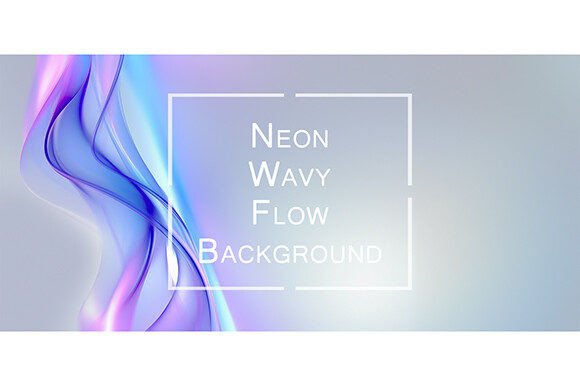
Neon Wavy Flow Background Evaluation
The digital landscape is saturated with visual content, making the selection of high-quality background assets a critical decision for designers and content creators. The Neon Wavy Flow Background represents a specific category of abstract imagery that combines dynamic movement with vibrant lighting effects. This asset is available as a 4384x2100 pixel JPEG file at 300 DPI, offering a premium resolution suitable for both digital and print applications. Understanding the technical specifications and aesthetic implications of this image is essential before integrating it into professional workflows.
Understanding the Visual Composition
This background features an abstract design characterized by fluid, undulating lines that create a sense of continuous motion. The term "Neon" in the title refers to the luminous color palette typically associated with the image, often utilizing high-contrast hues against darker or lighter fields. The wavy flow pattern avoids rigid geometric structures, instead opting for organic curves that guide the viewer's eye across the frame. At a resolution of 4384 pixels wide by 2100 pixels tall, the image provides ample horizontal space, making it particularly well-suited for wide-format displays and panoramic compositions.
The file format is specified as JPEG, a standard choice for photographs and complex gradients due to its compatibility across various software platforms. However, users should note that JPEG compression may introduce slight artifacts if the file is saved repeatedly. The 300 DPI specification indicates that the image is optimized for high-fidelity printing. In practical terms, this means the file contains sufficient pixel density to produce sharp output on physical media without visible pixelation, provided the print dimensions align with the native resolution.
Primary Applications and Use Cases
The versatility of this abstract light background allows it to serve multiple functions across different media channels. Its primary strength lies in its ability to provide a visually engaging backdrop without overpowering foreground content. Below are the specific scenarios where this asset is most effective:
- Website and Application Interfaces: The wide aspect ratio (approximately 2.09:1) makes it ideal for hero sections on landing pages or splash screens for mobile applications. The flowing lines can subtly direct user attention toward central call-to-action elements.
- Social Media Branding: For platforms like LinkedIn, Twitter, or Facebook, the image serves as a compelling cover photo or banner. The neon aesthetic appeals to audiences interested in technology, gaming, or modern lifestyle brands.
- Print Marketing Materials: Due to the 300 DPI quality, this file is suitable for posters, postcards, and packaging designs. The high resolution ensures that text overlays remain legible and that the background details do not blur when printed.
- Physical Stationery: Designers can utilize the image for notebook covers, business cards, and event invitations. The abstract nature of the design allows it to fit diverse brand identities without appearing too niche.
- Wall Art and Decor: When scaled appropriately, the high-resolution JPEG can be used for large-format wall art prints, creating an immersive atmosphere in home or office environments.
Benefits of High Resolution and Format
Selecting a background with 4384x2100 pixel dimensions offers significant advantages over lower-resolution alternatives. The primary benefit is scalability. Designers can crop the image to focus on specific areas of the wave pattern without losing clarity. This flexibility is crucial when adapting a single asset for various layouts, such as converting a horizontal banner into a vertical social media story.
The 300 DPI rating is another critical factor for professionals requiring print output. Many stock images are sold at 72 DPI, which is adequate for screens but results in blurry text and jagged edges when printed at standard sizes. By choosing a 300 DPI file, users eliminate the need for upscaling, which often degrades image quality. This ensures that business cards, brochures, and posters maintain a premium look that reflects positively on the brand.
Tradeoffs and Considerations
While the Neon Wavy Flow Background offers numerous advantages, there are specific considerations that users must evaluate before purchase or download. The first consideration is the file format. As a JPEG, the image does not support transparency. If a project requires the background to blend seamlessly behind transparent UI elements or cut-out graphics, users will need to perform additional editing to remove the background or work within the constraints of the solid image.
Another factor is the intensity of the design. The "neon" and "flow" characteristics create a strong visual statement. In contexts where minimalism is preferred, such as corporate reports or legal documents, this background may be too distracting. It is best suited for creative industries, entertainment sectors, or brands aiming to convey energy and innovation. Overusing such a vibrant pattern can lead to visual fatigue for the audience, particularly if the text contrast is not carefully managed.
Color management is also a potential tradeoff. RGB-based digital files often display colors differently than their CMYK print counterparts. A bright neon hue on a monitor may appear slightly duller or shifted in tone when printed. Users planning large-scale print runs should verify color profiles and consider soft-proofing the image to ensure accuracy.
When to Choose Alternatives
There are situations where this specific background may not be the optimal choice. If the goal is to create a clean, corporate environment, a solid color or subtle texture might be more appropriate. Similarly, if the project requires a vector format (such as SVG or EPS) for infinite scaling without any loss of quality, a raster JPEG file will not suffice. Vector formats allow for easier manipulation of individual shapes and colors, whereas the JPEG presents the image as a fixed grid of pixels.
Additionally, if the target audience includes individuals with visual sensitivities, the high contrast and moving implications of wavy lines could be problematic. In accessibility-focused designs, simpler backgrounds with lower contrast ratios are generally recommended to reduce cognitive load. Furthermore, for projects requiring a transparent background layer to overlay on top of other images, a PNG or PSD file would be necessary rather than a standard JPEG.
Decision-Making Insights
To determine if the Neon Wavy Flow Background aligns with your goals, evaluate the following criteria. First, assess the intended medium. If the primary output is digital web content or high-quality print marketing materials, the 4384x2100 resolution and 300 DPI specification make this a strong candidate. Second, consider the brand voice. Does the energetic, fluid nature of the design match the message you wish to convey? Third, review the technical requirements. Can you work within a rectangular, non-transparent frame?
If the answer to these questions is affirmative, this asset offers a cost-effective solution for enhancing visual appeal. It eliminates the need for custom illustration while providing a professional finish. However, if the project demands extreme customization, transparency, or a minimalist aesthetic, exploring alternative assets or hiring a designer for a custom creation may yield better results. Ultimately, the value of this background lies in its balance between high technical fidelity and versatile aesthetic application.